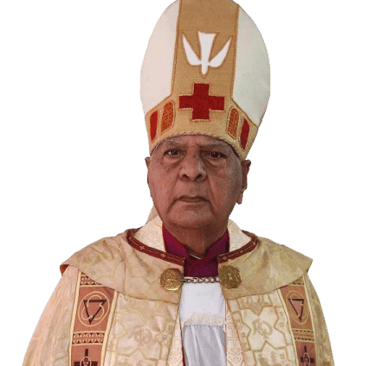
The Church of India, Pakistan, Burma, and Ceylon (CIPBC) represents the historical and continuing Anglican presence in the Indian subcontinent. It was the established Anglican church during the British Raj and remains a distinct entity today, separate from the united churches like the CSI or CNI.
1. Colonial Foundations (1814–1927)
The church began as an extension of the Church of England.
The Diocese of Calcutta (1814): Established by the East India Company Act of 1813, it was the first Anglican diocese in India. Its jurisdiction initially covered not just India, but also Australia and parts of Africa.
Statutory Status: For much of the 19th century, the church was a "statutory" body, meaning it was legally tied to the British Parliament and the Crown. Its bishops were appointed by the British Monarch.
2. Legal Independence: The 1927 Act
As the movement for Indian independence grew, the Anglican church sought to sever its legal ties to the British State to become an indigenous, self-governing body.
The Indian Church Act (1927): This British Act of Parliament legally separated the Church in India from the Church of England.
Creation of the CIBC: In 1930, it became the Church of India, Burma, and Ceylon (CIBC). It adopted its own Constitution, Canons, and Rules.
The Addition of Pakistan: After the partition in 1947, "Pakistan" was added to the name, making it the CIPBC.